.🌐日本語版はこちら。
Benesse Art Site Naoshima is home to several museums and art installations.
This guide explains how to get there from JR Okayama Station.
.
This information is for reference only. Please check the official websites for the latest information^^
.
.
.
Cautions
There are 2 different ports on Naoshima (in Japanese, it is written as “直島”).
One is “Miyanoura Port“, and the other is “Naoshima Port (Honmura).”
.
Miyanoura Port (Japanese: 宮浦港)

Miyanoura Port is located on the west side of Naoshima, and it’s the bigger port.
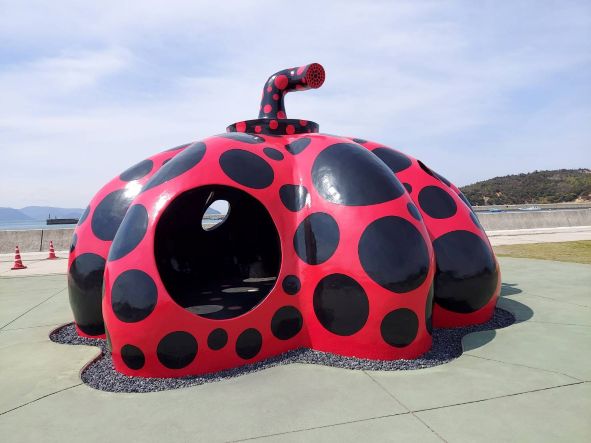
Yayoi Kusama’s “Red Pumpkin” sculpture is located at Miyanoura Port.
.
Naoshima Port (Honmura) (Japanese: 直島港(本村))
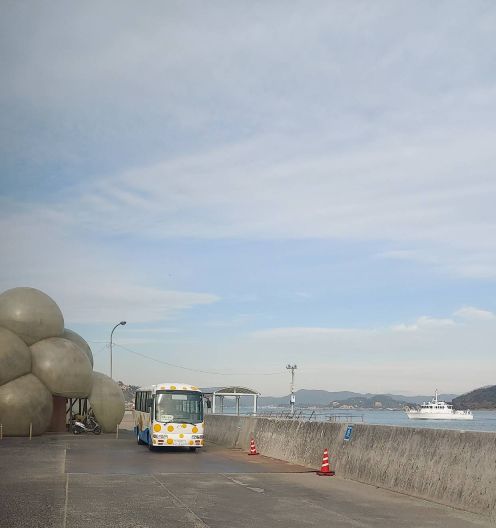
Naoshima Port (Honmura) is located on the east side of Naoshima.
It’s a small port, and there are only small passenger boats, such as the ones that come and go between UNO Port and Naoshima Port (Honmura). This port is located in the “IE Project” area.
.
Personally, I found the port names very confusing.
It’s because “Naoshima” is the name of the island, and some people call this port “Naoshima Port” while others call it “Honmura”.
.
.
Step1:from JR Okayama Station(Japanese: 岡山駅)
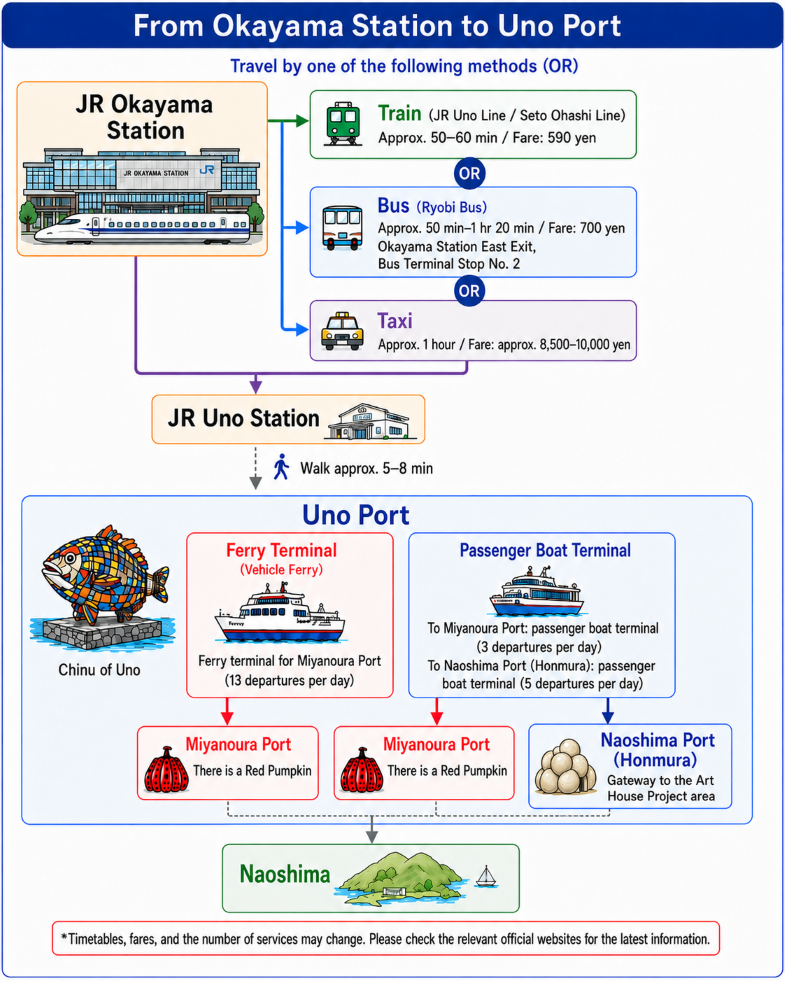
There are 3 ways to get to UNO Port (Japanese: 宇野港) from JR Okayama Station.
.
A: Taking a train from JR Okayama Station to JR UNO Station (Japanese: 宇野駅)”
OR
B: Getting on a bus from the bus stop number 2 at the east side of JR Okayama Station to UNO Port
OR
C: Taking a taxi from JR Okayama Station to UNO Port.
.
.
A: If you take a train from JR Okayama Station to UNO Station
*The fare: 590 yen for adults.
*It takes about 50 minutes to 60 minutes to get to JR UNO Station.
.
*Please take the UNO Line (mainly from the platform number 7) or the Kojima Line (mainly from the platform number 7, but sometimes 5, 6, 8) at JR Okayama Station.
.
*Depending on the timetable, there may be a direct train or you may need to transfer trains at JR Chayamachi Station (Japanese: 茶屋町駅).
It takes about 15 minutes to 21 minutes from JR Okayama Station to JR Chayamachi Station.

Chayamachi Station is quite small, and it’s very easy to transfer to the next train at Chayamachi Station.
The platform is the same, it’s just on the opposite side of the platform.
After changing the train at Chayamachi Station, it takes about 25 minutes to get to JR UNO Station.
UNO Station is the terminal station, it doesn’t matter whether you transfer at Chayamachi Station or not.

.
*UNO Port is at the opposite side of UNO Station. It takes about 5-8 minutes on foot from UNO Station.
.
.
B: If you use a bus from JR Okayama Station to UNO Port
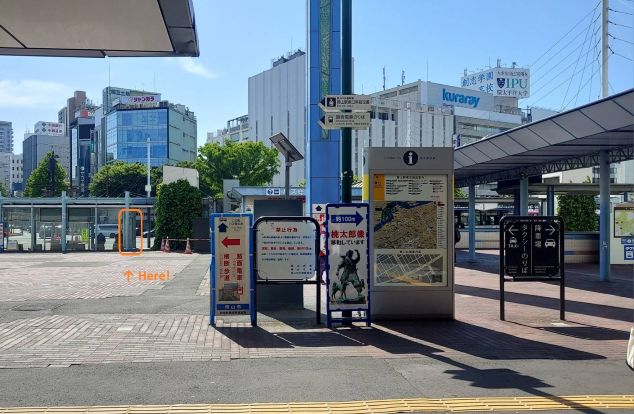
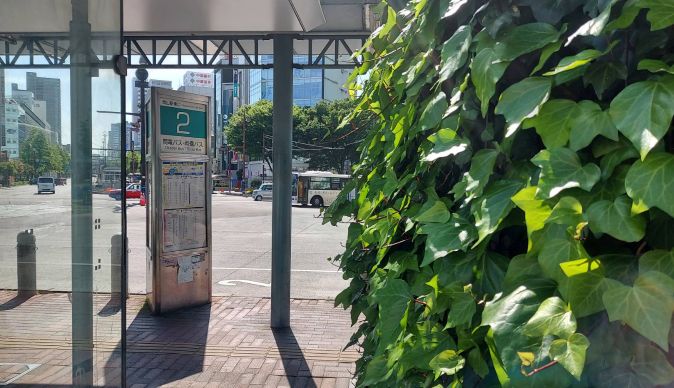
*The bus departs from bus stop number 2 at the east side of JR Okayama Station.
*It takes about 50 minutes to 1 hour 20 minutes, depending on traffic.
*The fare: 700 yen for adults.
.
(As of July 2026) Credit cards are not accepted.
You can pay with cash or a transportation IC card, such as Suica, PASMO, or ICOCA. Mobile IC cards are also accepted.
For the full list of accepted IC cards, please visit the official Ryobi Bus website.
.
If you pay in cash, we recommend bringing coins or ¥1,000 bills in advance, as bus drivers may not be able to break ¥10,000 bills.
I have actually seen bus drivers run out of ¥1,000 bills needed to break ¥10,000 bills, so it’s a good idea to bring smaller bills in advance.
*Passengers get on and off the bus through the front door only.
If you are paying in cash, take a queue number ticket (a small numbered ticket) when you get on the bus.
If you are using a transportation IC card or a mobile IC card, simply touch your card or smartphone on the card reader when you get on the bus.
When you get off at UNO Port, if you are paying in cash, put the exact fare and your queue number ticket into the clear fare box next to the driver. If you need coins, you can exchange a ¥1,000 bill for coins on the bus.
If you are using a transportation IC card or a mobile IC card, simply touch your card or smartphone on the card reader again when you get off the bus.
.
*Many of these buses offer free Wi-Fi
.
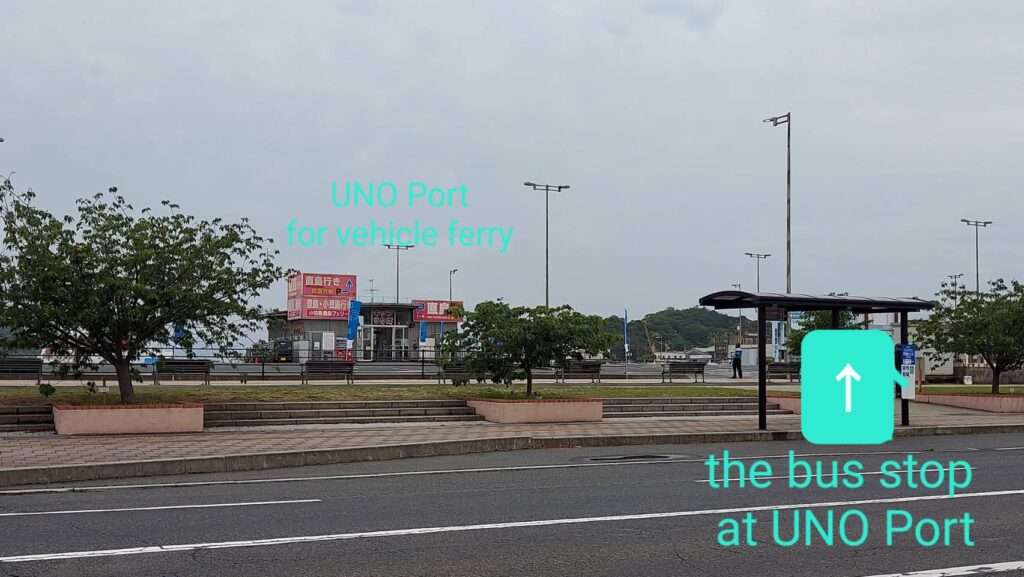
The bus stop at “UNO Port” is the next stop after the bus stop at “UNO Station”.
After getting off the bus, it takes a few minutes to walk to UNO Port on foot.
If you’d like to stop by a convenience store (7-Eleven) before going to UNO Port, it’s a little more convenient to get off at the “UNO Station” bus stop. ^^
.
.
C: Taking a taxi from JR Okayama Station to UNO Port
*It takes about 1 hour, give or take a few minutes.
*It costs about from 8,500 yen to 10,000 yen, depending on traffic.
*There are usually taxis waiting at Okayama Station.
.
.
Step2: from UNO Port (Japanese: 宇野港)
Getting on the vehicle ferry or passenger boat (by Shikoku Kisen) from UNO Port to “Miyanoura Port” on Naoshima, or getting on the passenger boat from UNO Port to “Naoshima Port (Honmura)”.
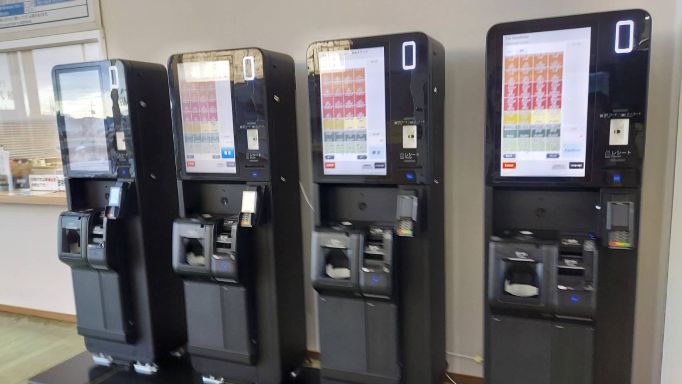
Boat ticket machines and a counter for Naoshima at the UNO ferry port
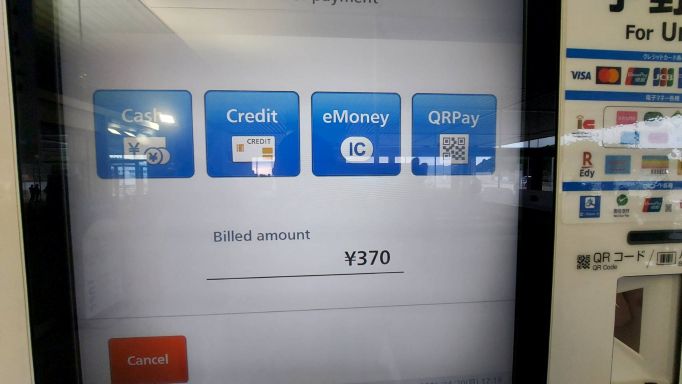
Boat ticket machine for Naoshima at the UNO ferry port
.
Cautions
*There are vehicle ferries and passenger boats between UNO Port and Miyanoura Port.
There are only 3 passenger boat departures from UNO Port to Miyanoura Port each day (as of July 2026). Please check the official website for the latest timetable and schedule.
*The port for passenger boats in UNO is located in a different place from the vehicle ferries.
It takes about 5-8 minutes on foot from all spots, such as the UNO Port vehicle ferry terminal, the bus stop at UNO Port, or JR UNO Station, to the passenger boat dock.
*If you take the passenger boat by taking a bus from JR Okayama Station, you had better get off at the bus stop at JR UNO Station. It is a little closer than the bus stop at UNO Port. ( But it doesn’t matter, the two bus stops are located at almost the same area.)
.
A: Going to “Miyanoura Port”

The vehicle ferry goes to Miyanoura Port in Naoshima. It’s a bigger port than Naoshima Port (Honmura). There’s Yayoi Kusama’s “Red Pumpkin” sculpture at the area of Miyanoura Port.
*The fare is 300 yen one way for adults, 570 yen for round trip (valid for 2 days). They accept cash only.
*The one-way fare for adults is 370 yen. Cash, credit cards, e-money, and QR code payments have been accepted since 2026.
.
A-1: At UNO Port for vehicle ferry
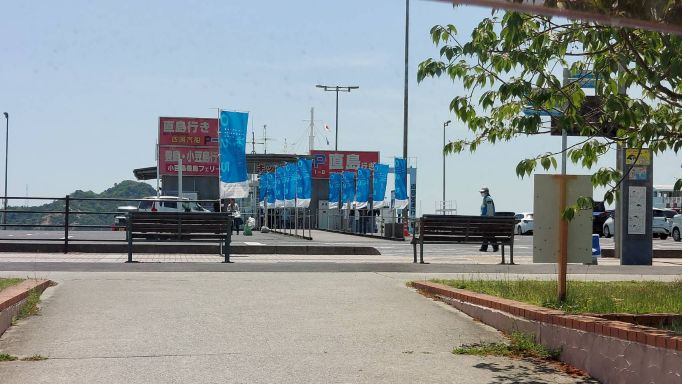
*13 vehicle ferries are departing from UNO Port to Miyanoura Port each day.
*The fare is 300 yen one way for adults, 570 yen for round trip (valid for 2 days). They accept cash only.
*The one-way fare for adults is 370 yen. Cash, credit cards, e-money, and QR code payments have been accepted since 2026.
*It takes about 20 minutes from UNO Port to Miyanoura Port.
*The ferry has seating for passengers, washrooms, drink vending machines and a deck.
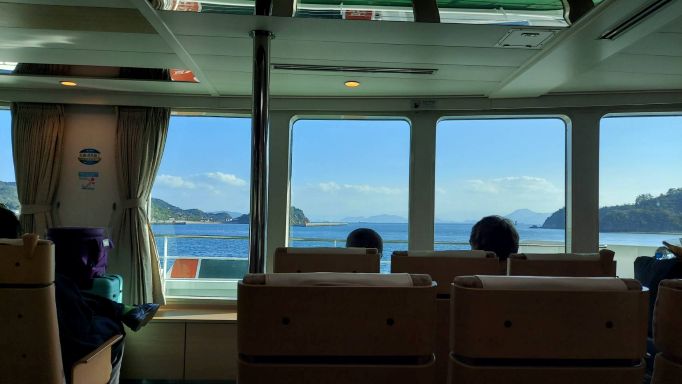
.
A-2: At UNO Port for passenger boats

*There are only 3 boat departures daily from UNO Port to Miyanoura Port.
*Passenger boats are not big, they accommodate about 80-96 people per boat, so it’s better to arrive early.
*The fare is 300 yen for one way for adults, 570 yen for a round trip. They accept cash only.
*The one-way fare for adults is 370 yen. Cash, credit cards, e-money, and QR code payments have been accepted since 2026.
*You can buy at the ticket counter or vending machines at UNO Port for ferry and then move to UNO Port for passenger boats on foot.
You can also buy the ticket at the ticket booth at UNO Port for passenger boats, but they open about 15 minutes before the departures. Payment there is likely to be cash only.
*It takes about 15 minutes from UNO Port to Miyanoura Port.
.
B: Going to “Naoshima Port (Honmura)”
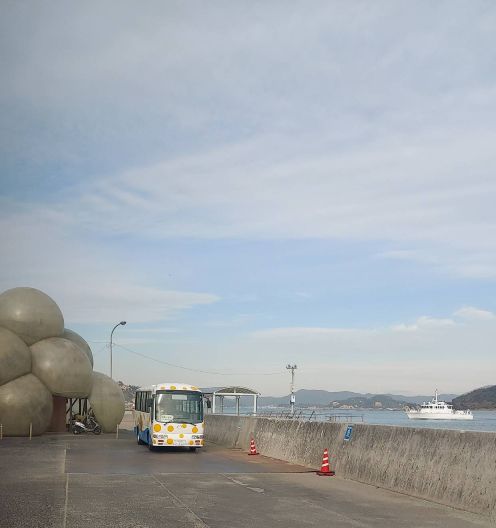
*There are 5 boat departures daily from UNO Port to Naoshima Port (Honmura).
*These passenger boats are not big, they accommodate about 80 people per boat, so it’s better to arrive early.
*”Naoshima Port (Honmura)” is located in the “IE Project” area.
*The fare is 300 yen for one way for adults, 570 yen for a round trip. They accept cash only.
*The one-way fare for adults is 370 yen. Cash, credit cards, e-money, and QR code payments have been accepted since 2026.
*You can buy at the ticket counter or vending machines at UNO Port for ferry and then move to UNO Port for passenger boats on foot. You can also buy the ticket at the ticket booth at UNO Port for passenger boats, but they open about 15 minutes before the departures.
*It takes about 20 minutes from UNO Port to Naoshima Port(Honmura).
.
.
Artwork of UNO : Chinu-the Black Sea Bream of UNO
The colorful fish sculptures “Chinu of Uno“ and “Kochinu of Uno“ are located about a 7-minute walk from both UNO Port and JR UNO Station.
(If you walk slowly, it’s safer to allow about 10 minutes one way so you don’t miss your ferry, train, or bus. ^^)
These artworks are displayed near UNO Port and are among the most iconic public artworks in the Uno area.
Both Chinu of Uno and Kochinu of Uno were created by Yodogawa Technique.
.
.
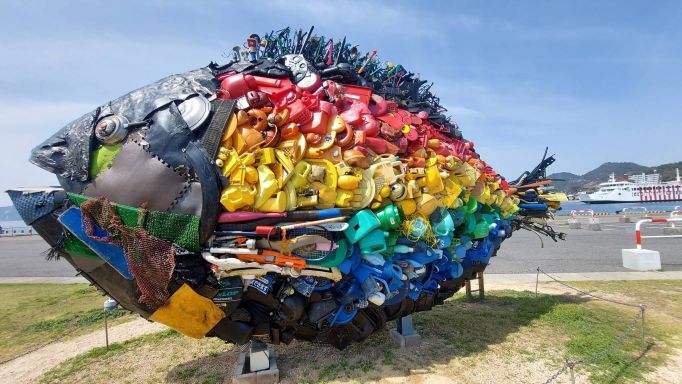
The sculpture of Chinu (black sea bream) is made not only from empty cans, plastic bottles, and other trash collected along the coast around UNO Port and Kojima Lake, but also from discarded items and driftwood such as tennis rackets and guitars.
These discarded materials, many of which drifted into the Seto Inland Sea, have been transformed into a unique work of art that now brightens the UNO waterfront. ^^
If you’re visiting UNO Port or JR UNO Station, be sure to stop by and see Chinu of Uno. It’s also a great photo spot!
.
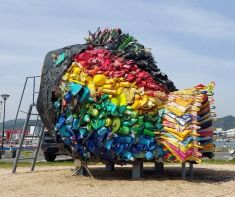
On October 30, 2016, Chinu of Uno welcomed a “baby”!
Right next to Chinu of Uno, you’ll find Kochinu of Uno.
Kochinu of Uno isn’t just an artwork—it’s also a slide that children (and even some adults!) can enjoy.
On a sunny day, you can take memorable photos with Chinu of Uno and Kochinu of Uno, with the blue sky and the calm Seto Inland Sea as your backdrop. If you’re lucky, you may even capture a Naoshima-bound ferry in your photo too!
You can also see both sculptures from the left-hand side of the ferry when you’re sailing from UNO Port to Naoshima. After visiting them up close, seeing them again from the ferry is a special experience. 😊
.
Yodogawa-Technique
Yodogawa Technique is the artist name of Hideaki Shibata, an artist born in Okayama Prefecture in 1976.
.
.
Step3: from Miyanoura Port /Naoshima Port (Honmura)
After arriving at Miyanoura Port or Naoshima Port (Honmura), you can continue to the Benesse Art Area.
There are two main ways to get to the Benesse Art Area.
.
A: After you get to Miyanoura Port and head for the Benesse Art Area
There are two main ways to get to the Benesse Art Area.
.
1. Getting on buses
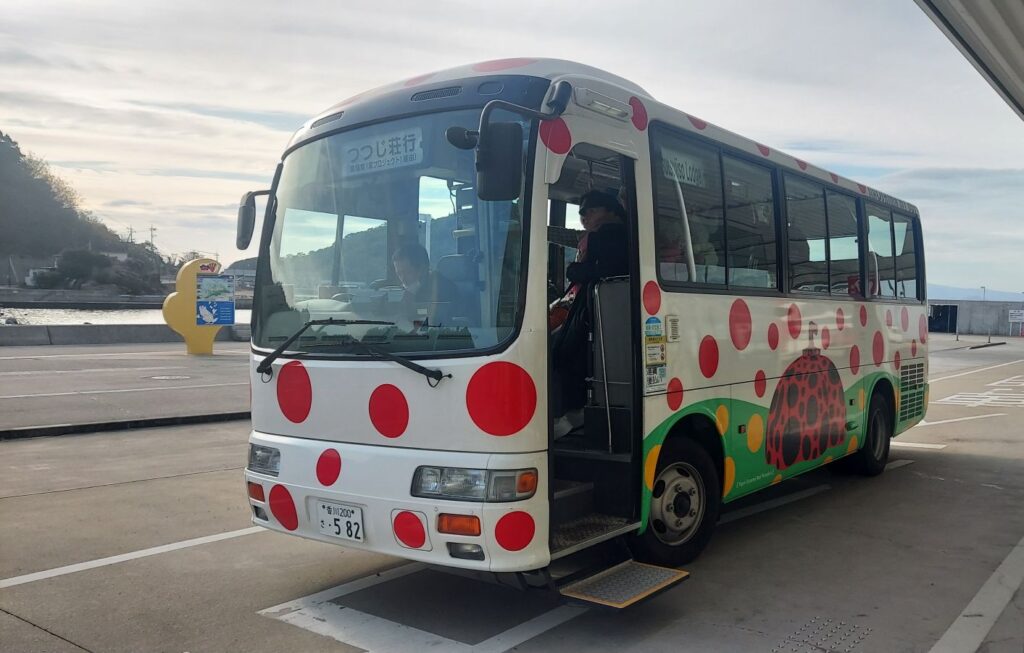
*Take a Naoshima Town Bus stop number 2.

*The fare is 100 yen for adults. (You need to pay in cash (coins) when you get off the bus, and there is no change machine available. Please make sure to bring small change in advance.)
*You need to transfer to “Benesse Art Site Naoshima Free Shuttle Bus” at Tsutuji-so bus stop or walk up to the Benesse area from there.
.
2. Rent an Electric Bicycle
There are several bicycle rental shops around Miyanoura Port.
Exploring Naoshima by bicycle while enjoying the island’s beautiful scenery and fresh sea breeze is a wonderful experience. Since Naoshima has more hills than many visitors expect, I recommend renting an electric bicycle to make getting around much easier.
Please note that the Benesse Art Area includes areas reserved for guests staying at Benesse House. Therefore, visitors who are not staying there are not allowed to enter the area by rental bicycle.
There is a bicycle parking area between Yayoi Kusama’s “Yellow Pumpkin” and the Tsutsuji-so bus stop. Please park your rental bicycle there.
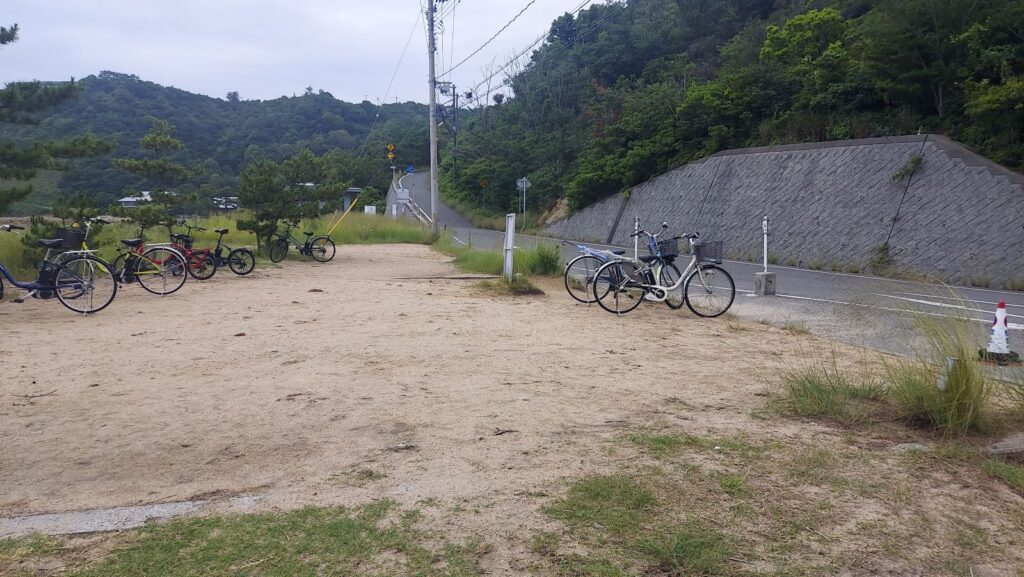
From the Tsutsuji-so bus stop, you can either take the Benesse Art Site Naoshima Free Shuttle Bus or walk uphill to the Benesse Art Area.
*Rent an electric bicycle around Miyanoura Port. There are some rental bicycle shops.
Since Naoshima is hilly, I recommend an electric bike to save your energy.
.
.
B: After you get to Naoshima Port (Honmura) and head for Benesse Art Area.
You can get to the Benesse Art Area from either Miyanoura Port or Naoshima Port (Honmura).
If you arrive at Naoshima Port (Honmura), why not spend some time exploring the Art House Project area, visiting the New Naoshima Art Museum, or enjoying a meal at one of the nearby cafés or restaurants before heading to the Benesse Art Area? They are all within walking distance from the port.
.
*Take a bus at the “Naoshima Port (Honmura)” bus stop.
*The fare is 100 yen (You need to pay in cash (coins) when you get off the bus, and there is no change machine available. Please make sure to bring small change in advance.) and transfer to “Benesse Art Site Naoshima Free Shuttle Bus” at Tsutuji-so bus stop or walk up to the Benesse area from there.
.
.
Art Museums in the Benesse Art Area
Naoshima is one of the beautiful islands in the Seto Inland Sea.
It is world-famous for its unique blend of contemporary art, architecture, and beautiful natural scenery.
You’ll see many international visitors on the island, and you may even find yourself thinking, “Am I really in Japan?” (lol)
In the Benesse Art Area, you’ll find Yayoi Kusama‘s iconic Yellow Pumpkin, along with museums and outdoor artworks scattered throughout the natural surroundings.
Take your time exploring the island while enjoying the sound of the sea, the fresh ocean breeze, the green hills, and the blue sky. I hope you’ll enjoy Naoshima‘s unique combination of art and nature.
If you’re lucky, you may also meet some of Naoshima’s friendly cats along the way. ^^
.
Artwork:Yellow Pumpkin
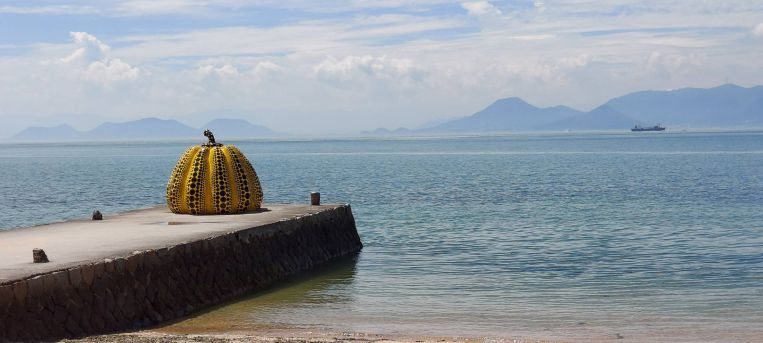
Yayoi Kusama‘s iconic Yellow Pumpkin is about a 4-minute walk (approximately 155 meters) from the Tsutsuji-so bus stop.
After getting off the bus, walk along the beach while enjoying the beautiful views of the Seto Inland Sea, and you’ll soon arrive at the Yellow Pumpkin. Walking across the sandy beach is a wonderful experience, too.
The Yellow Pumpkin is one of Naoshima‘s most popular photo spots.
There are almost always people waiting to take photos, so if you find it uncrowded, you’re lucky!
Please note that the Yellow Pumpkin is installed by the seaside. To protect the artwork, it may be temporarily removed when strong winds, typhoons, or other severe weather are expected.
.
Benesse House Museum
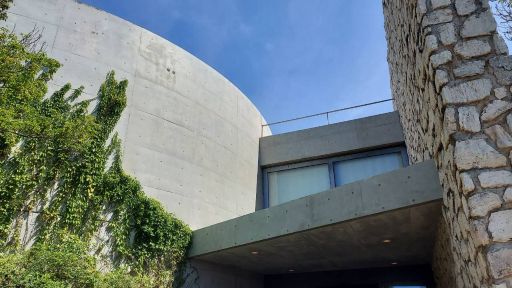
Located about 5 minutes by the Benesse Art Site Naoshima Free Shuttle Bus from the Yellow Pumpkin, Benesse House Museum is a unique facility that combines an art museum and a hotel.
Perched on a small hill, the building was designed by the world-renowned architect Tadao Ando.
Inside the museum, you can enjoy contemporary artworks by both Japanese and international artists.
A day visit is well worth it, but staying overnight offers a completely different experience. In the peaceful atmosphere after the daytime crowds have gone, you can enjoy a truly special time surrounded by art and nature.
.
.
Lee Ufan Museum
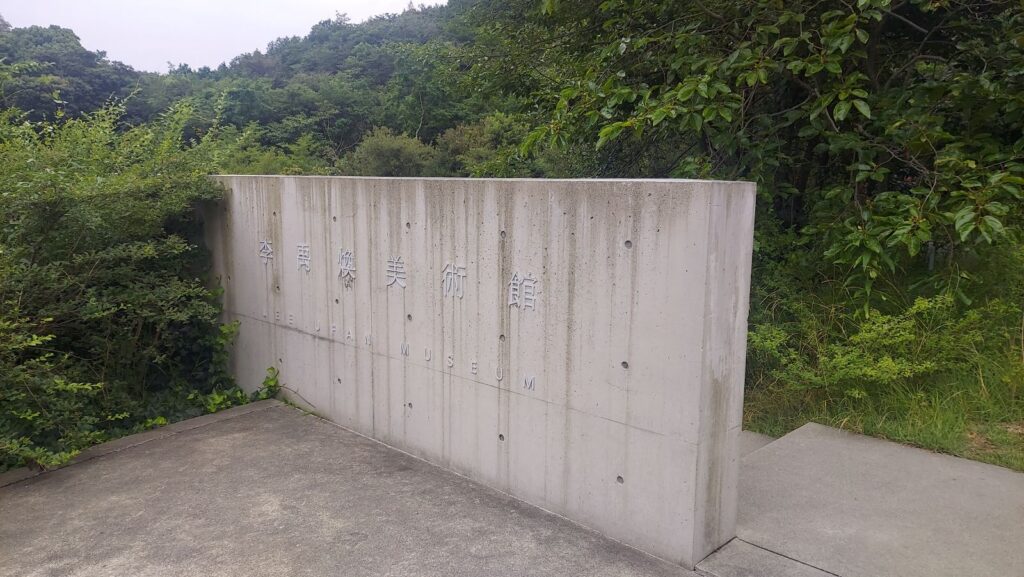
The Lee Ufan Museum was created through a collaboration between the internationally acclaimed contemporary artist Lee Ufan and the world-renowned architect Tadao Ando.
Designed to blend harmoniously with its natural surroundings, the museum offers visitors a unique opportunity to experience contemporary art and architecture together in a peaceful setting.
.
Chichu Art Museum
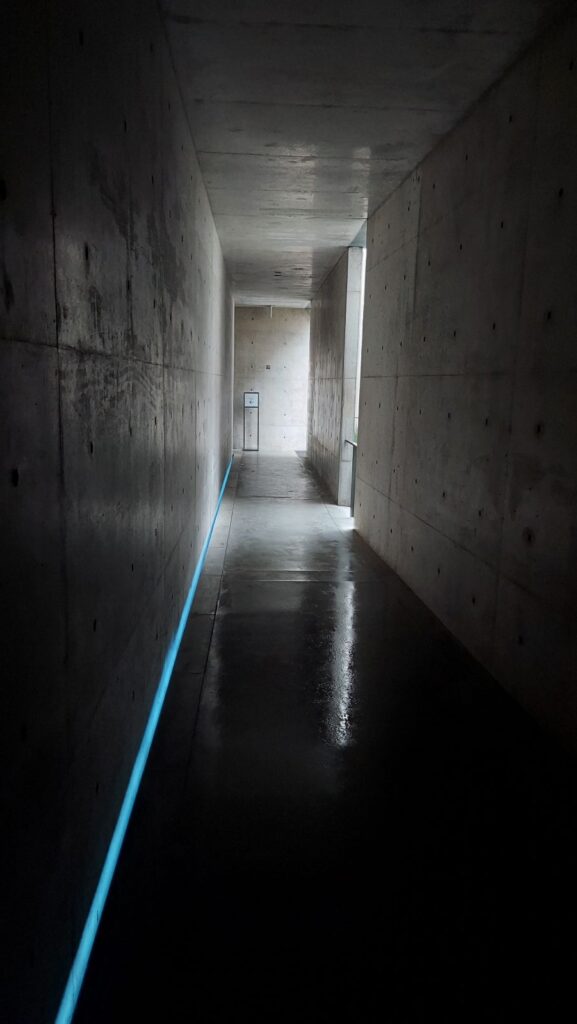
The Chichu Art Museum, designed by the world-famous architect Tadao Ando, is one of Naoshima’s most iconic attractions.
To preserve the island’s natural landscape, most of the museum is built underground.
The building itself is a work of art, where nature, light, space, and architecture blend together to create a truly unique and beautiful experience.
Inside the museum, you can enjoy permanent installations by Claude Monet, James Turrell, and Walter De Maria. Natural light is skillfully incorporated into the museum, so the atmosphere and appearance of the artworks and spaces change depending on the time of day and the weather.
The Chichu Art Museum is one of the most popular museums on Naoshima, so I highly recommend making a reservation online before your visit. According to the official website, if online tickets are sold out, there will be no on-site sales on the day.
The Ticket Center (reception, parking area, etc.) is located across the road from the museum.
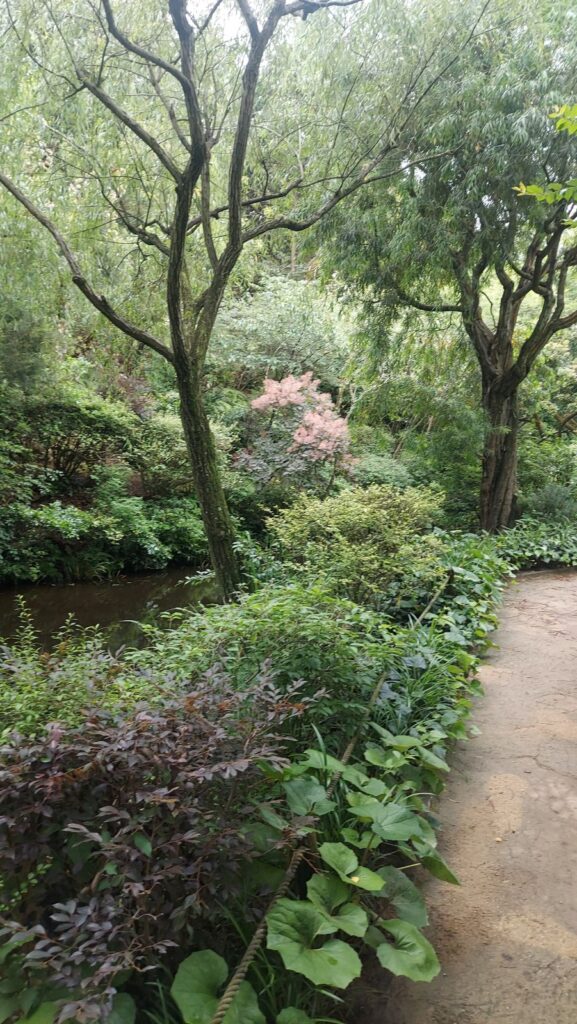
Between the Ticket Center and the museum is the Chichu Garden, which was inspired by Claude Monet’s famous garden at Giverny. Around 200 varieties of flowers and trees are planted here, including water lilies, irises, and willows that Monet painted in his later years.
My recommendation is to arrive a little before your reservation time, or take a walk through the Chichu Garden after visiting the museum while waiting for your bus. The garden blends naturally into Naoshima‘s landscape, so at first it simply feels like part of the island’s scenery. But as you continue walking, you may find yourself thinking, “This somehow feels like I’m in another country.” It’s a truly charming place.
.
Naoshima New Museum of Art
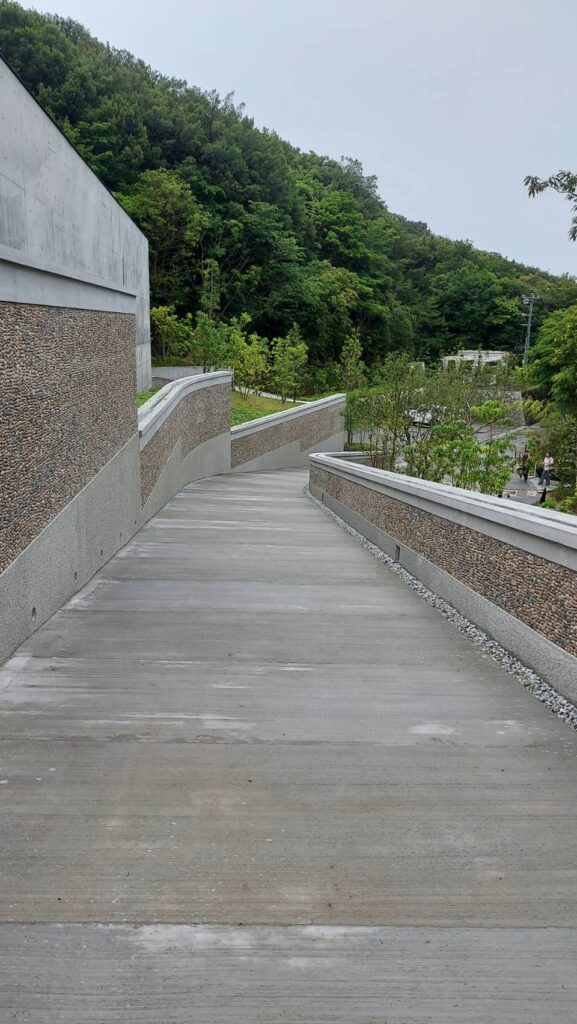
The Naoshima New Museum of Art, designed by the world-renowned architect Tadao Ando, opened in May 2025 on a small hill near the Honmura district of Naoshima.
I visited the museum myself, and I was impressed by both its beautiful exterior and interior. The building itself is one of the highlights of the visit.
Inside the museum, you can enjoy works and special exhibitions by leading contemporary artists from across Asia. It is a wonderful place where contemporary art, architecture, and nature blend together beautifully.
.
.
Hotels
(アフィリエイト広告を利用しています。)
Planning an overnight stay? Hotels near JR Okayama Station are convenient if you arrive the day before your trip, while hotels near UNO Station are ideal for catching an early ferry to Naoshima. Click below to check the latest prices and availability.
|
|
|
|
|
|
|
|
|
|
.
【Benesse House < Naoshima >】
https://a.r10.to/h9a94H
.
.
Thank you for reading this far. I hope this guide will be helpful when planning your trip to Naoshima. 😊